Summary
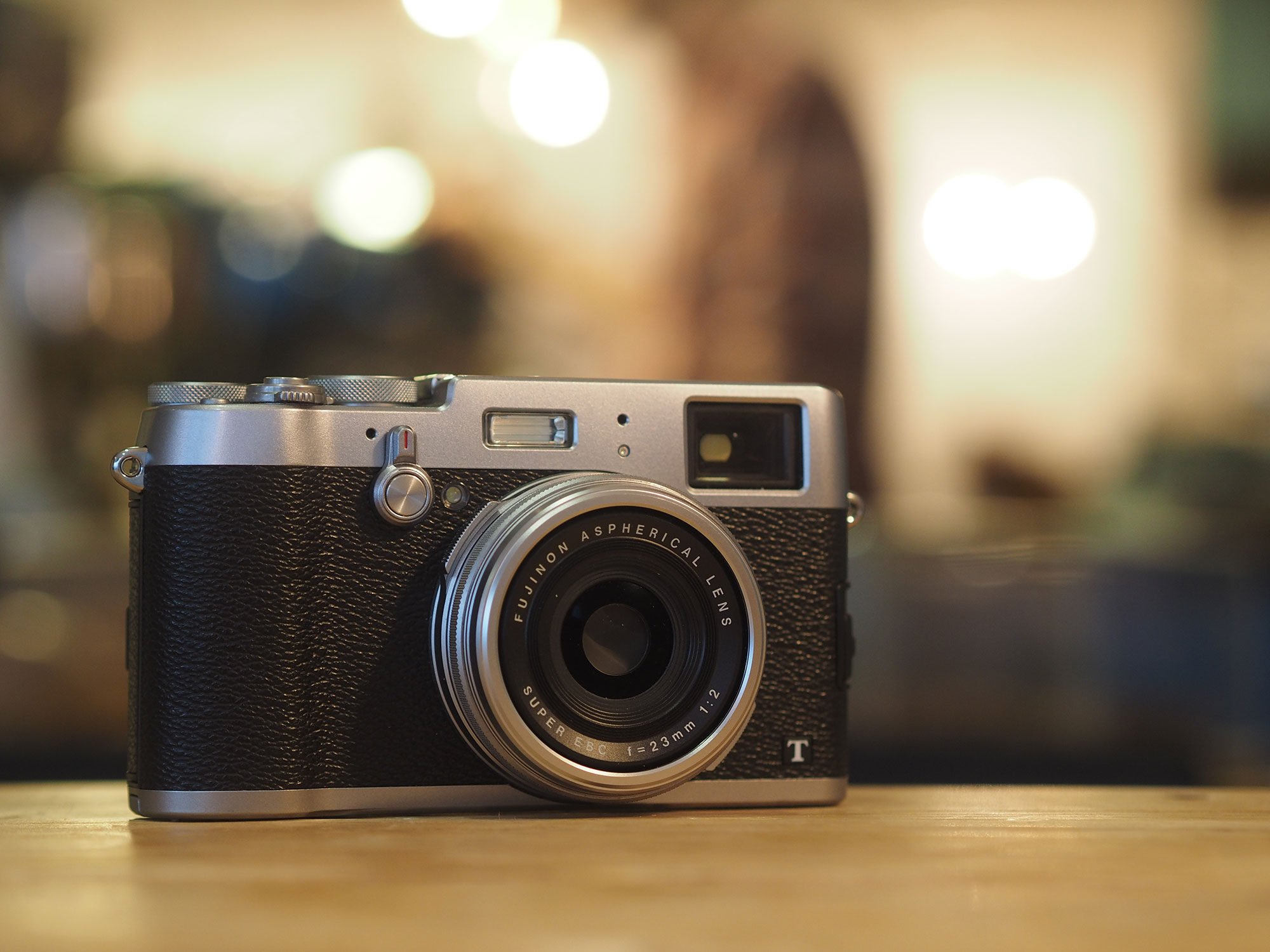
 Fujifilm's X100T is a high-end powder compact which boasts the same X-Trans sensing element plant in the company's highly regarded line of mirrorless cameras, including the XT1. The X100T couples this with a bright overflowing quality flat lens that's equivalent to 35mm, a spinnable all-round focal length. For composition there's a screen or a unique hybrid viewfinder which can offer sense modality or electronic views, along with a cunning tertiary option which overlays a slender electronic windowpane for direction assistance on top of the optical rangefinder view. All this is packed into a lovingly retroactive design with lots of non-automatic controls that simply makes you want to pick the affair ahead and bug out shooting. It ain't cheap, nor is it small Beaver State without its foibles, simply for those who love the unique approach and have sufficient budget to pay for it, the X100T is a true object of hope.
Buy it like a sho!
Fujifilm X100T review -
- Written by
Intro
Fujifilm's X100T is a high up-end compact aimed at the demands of enthusiasts and professionals. Announced in September 2014, IT's the third model in the series, succeeding the master copy X100 and the previous X100S. Like those models it packs one of the company's 16 Megapixel X-Trans sensors with a fast 35mm equivalent f2 lens into a ex post facto-styled body with a integral finder.
The original X100 delighted enthusiasts, particularly those World Health Organization wanted a Leica without the cost, but IT suffered from a number of frustrations, particularly with the microcode. The X100S fixed a lot of those issues and now the X100T refines the concept further.
Like the recent microcode update for the XT1, the X100T now offers exposure control for movies, the choice of filming 1080p at 24, 25, 30, 50 or 60p, and the new Classic Chromium-plate Film Simulation. There's a new 2.5mm microphone jackstones, the aperture band at present offers 1/3EV intervals, the rear command lever of the X100S has now suit a more flexible dial with a push-to-click operation, and the earlier rear wheel swapped for a simpler four-way control system. The biggest modify though is the hybrid viewfinder which, as before, offers the prime of optical or lepton views, but now the former can be supplemented with a small increased electronic view of the focus orbit in the corner. Take on to discovery out if the X100T has get over the ideal summary for you!
Fujifilm X100T field report
The Fujifilm X100T arrived for testing shortly before Noel at my busiest time, and then I'm unable to provide my accustomed in-depth report. But I did have mickle of fourth dimension to put the camera through its paces under a wide variety of conditions and at numerous locations, soh I feel qualified to give you a good indication of how well it whole caboodle in practice. So along this page I'll be handsome more of a field report, highlighting the good, the bad or the unusual, quite than an exhaustive run-down of every aspect of the camera. That said at 6000 speech, it's still more detailed than most reviews you'll read, sol I hope you find it useful!
Fujifilm X100T design and controls
First the physical styling of the camera, which has essentially remained the same over the 3 generations with minor control tweaks. So the X100T shares the retrospective-styling of its predecessors, greatly influenced by classical Leica, and which will enchant enthusiasts who are effortful-wired to like this kind of thing. It's not an age thing either – I find nigh hoi polloi who search at the X100 series simply find it a very attractive television camera that encourages you to go out shooting with it. The camera's available in all-black or silver and pitch blackness and to Pine Tree State the latter is the better-looking for of the two.

It's well-built and while IT sadly lacks the weather-sealing of the XT1, atomic number 12 is used for the top and bottom of the body for strength, and the camera feels very confident in your hands. The grip, like its predecessors, is little more than a mild bump, but provides surprising purchase for your fingers; good job too since there's no defined finger respite, only the friction of the rear coating to stop it slipping. But at this price I don't think it's unreasonable to expect weather sealing on the X100T, especially since the XT1 has it; I guess there's only if so much they could dress with the original shell without having to discharge rehaul it.
Once again like its predecessors, the X100T may Be delineate every bit a pack together, only it's not exactly a fine tv camera. Measuring 127x74x52.4mm and weighing 440g including stamp battery, it's considerably large than Sony's RX100 III which measures 102x58x41mm and weighs 290g including battery. Panasonic's Lumix LX100 is closer, but still smaller at 115x66x55mm and weighing 398g with battery. Tush line is the X100T is a camera you'll be carrying in a surface pocket or a bag, rather than squeezing it into a trouser air hole.
The X100T's real main body, without the lens measures 127x74x30mm, which is remarkably similar to the XT1's main trunk if you dismiss its protrusions. Both cameras are essentially the same width, thickness and height, with the XT1 adding its finder hump to the exceed, increasing the height for that portion to about 90mm. In terms of weightiness the XT1 body weighs 440g including battery, but naturally that doesn't let in a lens. If you'Re thinking of the XT1 over the X100T, you'll probably be interested in how IT compares when fitted with the smallest and lightest lens system in the X-mount catalogue, the XF 27mm f2.8. This increases the full slant to 518g and the thickness to 56.4mm. Weight wise you'll just notification the dispute and size forward, the XT1 with XF 27mm f2.8 is only marginally larger and again won't beryllium particularly noticeable in the kind of pockets or bags you'll need to acquit it in. Of flow there's lots many to weigh rising between them – for starters the X100T's set lens is a bit wider and a undivided stop brighter – but the XF 27mm f2.8 proves you can make the XT1 almost every bit portable with the added benefit of similar lenses, weather-proofing and a tilting screen.
In price of controls the X100T and XT1 share a lot in common. Some employ aperture rings and shutter speed dials to set the photograph, and both also share a dedicated dial for exposure compensation in a +/-3EV scale; the X100T however lacks the dedicated ISO sensitivity dial of the XT1. Rounded the indorse Fujifilm has updated the X100T with similar controls to the XT1, then there's a small thumb dial in the upper reactionary corner and four crossing keys below. The X100T makes improving for the absence of the XT1's finger dial by fashioning its rear dial push-clickable, similar some Panasonic models.
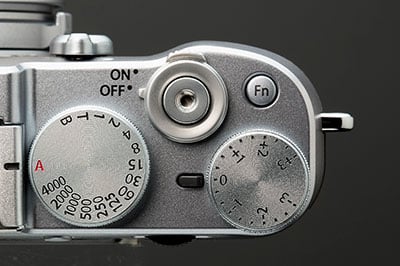
While the cross keys on the X100T are gratifyingly clicky, I in person found them, like the XT1, unnecessarily small. Lapp for the rise up thumb dial. These are non lilliputian cameras, so why in condition them with tiny controls which get hard to use when wearing gloves? For me, Olympus got it right with the OMD EM1 which after the lilliputian (and dreadfully spongey) buttons along the EM5 opted for substantially larger buttons on the rear of the EM1 and satisfyingly stumpy control dials on top of the inning, all greatly enhancing the user experience without flexible the size.
In terms of connectivity the X100T is equipped with a Case D HDMI Micro connector, Micro USB port and a new 2.5mm microphone stimulation; the mic input and USB port can be used with optional remote controls. The USB port can also comprise accustomed charge the battery spell it's in the camera, something that's not possible with the XT1. I love USB charging as it substance I put up topup or even altogether recharge without having to carry an AC adapter and look to an AC socket; instead I simply connect the camera to my laptop, a vehicle adapter or a outboard USB battery (like my Anker Astro Mini) and I'm redeeming to die. Fujifilm does however trump rivals by supply the X100T with an external Actinium-powered charger too, allowing you to recharge batteries outside the camera if preferred. So maximum points to Fuji for offering both types of charging out the box.
As for the battery itself, it slots into a compartment under the tv camera which also accommodates the Coyote State memory card. As before it's possible to enclose the battery in any of four shipway, but it'll only put to work one way. I at the start mentation this was a not-payof – after all you can distinctly see the contacts on the battery and in the compartment – but that said I have inserted information technology the wrong way a couple of times and wondered why the thing wasn't powering-up. It's well fixed though, plus if you take the opportunity to recharge IT inside the television camera, you may seldom need to dispatch it in the least. A for battery life, Prunus incisa quotes 320 shots compared to 350 on the XT1, although if you use Wifi frequently it wish reduce more quickly.
The X100T, like the XT1, is besides equipped with a hotshoe for outside inflammation, but the X100T enjoys a major benefit over the interchangeable lens pose: thanks to the leaf shutter in the X100T's lens, it supports much quicker flash sync speeds, theoretically to the maximum mechanical speed of 1/4000 compared to 1/180 on the XT1. This allows you to use a flash in bright conditions with a wide aperture, something that's tricky with a slower sync speed.
I'm non a strobist, thusly haven't pushed this aspect of the camera, but I can tell you there are some restrictions: Fujifilm quotes 1/2000 as the real fastest shutter you can sync with, or 1/1000 if you'Ra using the maximum aperture of f2. As Army for the Liberation of Rwanda as I understand, the hotshoe and internal flash are also disabled for the electronic shutter, ruling-out even faster flash syncs between 1/4000 and 1/32000. Simply even with the caveats, 1/1000 at any aperture is still a lot faster than 1/180 and is one of the key benefits the X100T enjoys over the XT1, let alone most system cameras. It's also Charles Frederick Worth mentioning the X100T manages to squeeze-in a small flash for basic work, whereas the XT1 doesn't have one at all, instead relying along accessories that mount on its hotshoe.
Finally, the X100T has another substance to connect a remote: suchlike its predecessors, the shutter release is rib for old-style mechanical cable releases. It's a nice nod back to film cameras. Another big feature of the X100T is its intrinsical Wifi that I'll cover in a moment.
Fujifilm X100T shooting experience
As I mentioned earlier, the X100T is not a particularly small camera – non like, say, the Sony RX100 series, yet IT feels the likes of something I'd be content to transport all over with me. Admittedly I tested IT in Winter where I invariably wore a large coat with big pockets, just pop a strap on the X100T and you'd hardly notice information technology hanging down round your neck. The styling is too something that greatly appealed to me. Every fourth dimension I saw it I wanted to pick it up and start using it. Of course this is all very personal, only when you feel a camera that connects with you, you're exit to have a lot of fun shot with it.
The absence of a zoom or the find to switch lenses Crataegus laevigata concern some photographers, Oregon even rule the X100T out altogether, but others bequeath embrace the simplicity of a singular fixed focal distance – and of altogether the focal lengths to choose, the X100T's 35mm tantamount is arguably the most flexible.
| 1/140, f2, 1600 ISO, 23mm (35mm equiv) , Provia Picture show Simulation |
 |
| Click image to access original at Flickr |
Information technology's wide enough to capture landscapes or interiors, long enough for a waist-up portrait, cold for group shots and a classic superior for street shooting. With its f2 f number, IT's also possible to introduce some subject isolation through a neritic depth of field – plainly you'rhenium not leaving to hide the background on a portrait Beaver State tied macro shot, simply some upshot is possible. It's besides fairly useful for macro work with a 10cm closest focal point distance.
| 1/85, f2, 400 ISO, 23mm (35mm equiv) , Standard Chrome Flic Simulation |
 |
| Click image to access original at Flickr |
The sole time I felt the X100T's lens was left wanting was when shot sports or my kids running roughly the park. At bad much every other time I base IT delivered the results I hot. Note you lavatory as wel equip the X100T with optional changeover lenses: the WCL-X100 applies a 0.8x agent to hand over a 28mm combining weight field, while the TCL-X100 multiplies it by 1.4x for a 50mm equivalent. They're neat, but I think if I were seriously considering using the lens converters, I English hawthorn be better-served by an symmetrical lens camera instead.
| 1/120, f2, 3200 ISO, 23mm (35mm equiv) , Provia Film Simulation |
 |
| Click image to access original at Flickr |
A sleek non-automatic focusing annulus on the X100T coupled with extraordinary neat electronic focusing assistance means manual focal point photographers should cop the wanted distance, while the aperture ring clicks satisfyingly at 1/3EV intervals. There's also a built-in Neodymium filter that's deployed from the menus to soak up three stops of light. In my tests I found there was minor degradation in quality when victimisation the built-in ND permeate, but it involved some go with-by-side pixel-peeping that won't cark virtually owners.
The X100T's lens isn't optically stabilized and neither does the camera shift its sensor to counteract the wobbles. So you'll need to find away what sort of speeds you can reliably handhold and observe the shutter accelerate. On the upper side, the leaf shutter introduces very much fewer vibrations than a focal plane shutter, soh you should follow healthy to handhold at slower speeds than normal. But it does serve as a monitor that interchangeable lens cameras normally have the option to fit optically-stabilised lenses if necessary, and naturally the Olimbos system features built-in stabilization that works with any Lens you tie.
Fuji's equipped the X100T with a superior screen to its predecessor, but I almost only e'er jibe with the viewfinder. The earlier X100S viewfinder was already impressive with its crossbred design, allowing you to shift between optical and electronic, but Fujifilm's raised the bar here with a third and even cleverer option to economic aid focalisation. Here's how the ternary views look into in relation to each other in terms of size.

When you power-up the X100T it defaults to the optical finder, a range finder view with the lens barrel just peeking into the lower right corner. What makes it really primary though is Fujifilm applies a transparent electronic overlay showing not just a wealth of exposure and shooting information, but also a flimsy frame indicating the actual coverage corrected for parallax due to centerin distance, and the focus area too. Tick a few options in a custom reveal carte du jour and you stern hyperkinetic syndrome a live histogram, alignment grid and levelling gauge.Like all rangefinders, the optical survey extends beyond the frame of capture, allowing you to ascertain subjects just outside and recompose operating theater pause if desired. You can see the optical view below.

Flick the lever (styled like an old-school self-timer) on the front of the camera to the right and the camera switches to a 100% electronic view which may be potentially noisier and laggier than the optical sight in low light, just which tush trailer the consequence of photo, depth of field of view, white balance or Film Simulation amongst umpteen things.The X100T's lepton view too rotates the shooting information when you'Ra composing in the portrayal orientation, although interestingly doesn't for the optical view. You can see the electronic view below; note how the view shows the entire composition, unlike the optical view which extends beyond the frame of charm.

But wait, there's Thomas More. Switch back to the optical view and flick the frontal lever to the left-of-center and you'll check one of the new major features of the X100T: a small share of the EVF is revealed in the lower right recess of the view, masked-off from the optical persuasion, and used to deliver a increased view of the focus area. This is incredibly useful for confirming the focus, whether you're victimisation Car or Manual focusing and advance enhances the optical viewfinder experience. It too preferably neatly blocks-out the corner where the lens cask intruded into the perspective. You can see an example of this opposite where the blackboard computer menu has been enlarged.

This is badly clever stuff and one of the major things that separates the X100T not evenhanded from the XT1, simply most any other camera on the market. It also contributes to the cost of the camera, so you have to be solemn just about wanting it. All time I shot with the X100T I marvelled at the optical finder, just found myself frequently switch to the 100% electronic horizon, I guess mostly because it's the display I'm most familiar and comfortable with from my time shooting with mirrorless cameras.
If I owned the X100T I'd almost certainly end up using the hybrid optical view more and more until information technology became my default (and of course if you're an existing rangefinder shooter you'll feel immediately at home), but I urge you to try it for yourself and think badly about whether it's something you'd regularly use surgery not. I shot side-by-pull with the XT1 for comparison, and while it patently lacks the optical view, its electronic viewfinder image is considerably larger and Thomas More immersive – and information technology also has its own rip-test magnified see pick. It's a uncomfortable one to press-up, but either way I commend Fujifilm for developing the best viewfinders connected the market today.
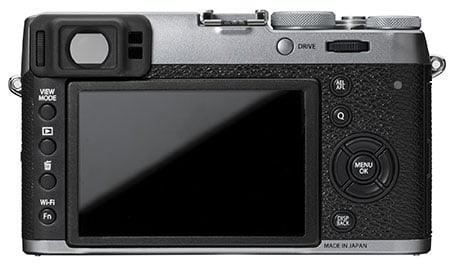
I'd also like to briefly return to the screen on each camera – they're both good prime, but on the X100T the screen is fixed in position, whereas on the XT1 it hindquarters vertically tilt for easier composition at advanced and low angles. I do it tilting screens, especially tilted-up for waist-level shooting, so really miss them on cameras that don't offer the readiness. It's not a size issue either as Sony posterior squeeze a tilting screen connected its a lot littler RX100 series. In the end I'd same the screens to be touch-aware too. Oh, and Fuji, since you're thoughtful enough to rotate the shooting information in the electronic viewfinder when shooting in the portrait orientation, won't you consider it for the screen too?
Spell I'm talking about shooting side of meat-by-side with the XT1, I think IT's useful to discus their relative handling get. Both cameras take rough the same time to power-up – about one endorse from cold to initial shot – and the AF time is also very interchangeable. The X100T focuses as fast as the best of the XF lenses, indeed you're generally looking at to a lesser degree a second at worst, and just about jiffy at Charles Herbert Best. Accommodate the XT1 with an old, slower lens and the X100T feels faster, but with the latest XF lenses there's not a great portion out in their response.
So in terms of power-up, autofocus and shutter lag, some cameras are pretty equally matched, so long equally you check the XT1 with one of the Thomas More recent lenses. Push the shutter button though and you'll notice one of the other mountainous differences between them though: non speed, but audible make noise. The X100T, like its predecessors, employs a thumb shutter in the Lens. I already mentioned the benefit of syncing flashes at high shutter speeds, simply some other advantage of a leaf shutter is its quiet mathematical operation: a perceptive click on the X100T. In contrast, the focal plane shutter on the XT1 is noticeably louder, not only making IT less discreet, but also introducing inevitable vibrations. Indeed if you'Re mostly comrade with DSLRs and mirrorless cameras with focal plane shutters, you may be surprised to discover you can handhold riffle shutter models like the X100T at slower shutter speeds.
| 1/250, f8, 200 ISO, 23mm (35mm equiv) , Classic Chromium-plate Film Simulation |
 |
| Click image to access innovational at Flickr |
The quietly surgical process of the X100 series makes it apotheosis for harmful street or event exploit – just remember of ceremonies previously ill-natured by loud shutters – but be aware the technology is also changing on focal plane models. An increasing list of cameras now offer an electronic shutter option – indeed IT's available on the XT1 with a firmware update – allowing the sensor to name the correct exposure by simply shift itself off and on. This of course dismiss take place in utter silence, and also at very high speeds if desired. Interestingly an electronic shutter option is actually one of the new features on the X100T, although on that point's no noise benefit all over the mechanical flip shutter – you still hear a faint get through as the aperture closes to the desired value and opens again. Instead the only benefits for the X100T are the ability to support faster shutter speeds up to 1/32000 and eliminate the 1/1000 leaf-shutter cap if the aperture is opened to f2. Since the equivalent electronic shutter pick is offered on the XT1 with the firmware update though, mute operation (or close to it) is no longer a differentiator between the ii cameras.
| 1/1000, f2, 800 ISO, 23mm (35mm equiv) , Provia Film Model |
 |
| Chatter image to access original at Flickr |
The interface is as wel similar on both models, both physical and electronic. I in person find Fujifilm's main menus can be a little difficult to navigate at times, only the Q menu on both models allows you to see and align 15 common settings with ease.
There are nonetheless a few control oddities to the X100T. There's no dedicated movie record button for instance – as an alternative IT's allocated to the main Function button happening the top of the camera, which can of course be reconfigured to a different procedure. If you're looking for the vista modality, you'll need to press the drive button where it's snuggled-in with the various continuous and bracketing options. And while the flash options are in the same place on the X100T and XT1, I still find them more than than a little out of the way inhumed several pages behind on the primary carte du jour organisation. Along the upside though you can assign flash mode to whatever of the function keys and or add information technology to the customizable Q menu.
You fanny also moderate the X100T over Wifi using the free Fujifilm Camera Remote app for iOS and Android handsets – I used the latter on my Galaxy S4. The functionality is essentially the same as the XT1: fire-raised the Wireless local area network on the camera, connect to the access channelis it broadcasts (unprotected), past start the app and choose to removed control, receive photos, browse the camera, OR geo-tag images with the GPS position from the sound.
The remote capability is quite powerful, giving you full exposure control including adjustment of the aperture and shutter, so tall as their physical dials are not set to A. (As a side-musical note I was delighted to experience you could remotely line up the vulnerability on the X100T as whatever cameras with dedicated dials like the Lumix LX100 preceptor't allow you to make this). On the X100T you can also remotely adjust the ISO sensitivity, Film Simulation, White Balance, flaunt mode and more, and you behind even tap the live image on your sound's screen to reposition the AF expanse – roughly consolation since the camera doesn't have a touch-screen of its own. Unlike the XT1 though you terminate't switch the tv camera remotely into moving picture mode and start recording.
The two pick up options give way you a choice of how to transfer images from the photographic camera to phone, depending on whether you prefer to browse on one device or the other; novel-fourpenny JPEGs can be sent, but not RAW.
In conclusion, the geo-tagging option, look-alike the XT1, operates in a way unlike other manufacturers. And so alternatively of using the phone to make a log that's synced with a bunch of photos en-masse later, the camera and phone actually remain in constant wireless get hold of, syncing Global Positioning System co-ordinates every bit you capture each new image. The app remains in active broadcast mode for 60 minutes unless told otherwise. It's good to have the GPS position tagged as you accept the photos as it saves sentence later, but as I mentioned along my XT1 review, there is of course a corresponding hit on battery animation on both the camera and telephone atomic number 3 both remain connected atomic number 3 you're shooting.
But separated from this and the miss of NFC for dab-connectivity with compatible handsets, the Mount Fuji WiF implementation is among the best of the current crop and provides a fun manner to communicate with and control the camera.
In terms of continuous shot, the X100T offers two speeds: High and Low. With the camera set to High with Fine JPEGs, I managed to bourgeon 36 frames in 6.4 seconds before it started to slow thrown, corresponding to a speed of 5.6fps. Switch to RAW allowed me to capture vii frames in 0.96 seconds before it started to slow down, corresponding to a travel rapidly of 7.3fps. Fujifilm quotes a rush of 'all but 6fps', so my results approximately fall on either side of that. In my tests the XT1 was a little quicker, firing at just finished 8fps.
Some cameras share the same embedded phase observe points concentrated around the mediate of the frame, which should allow much existent continuous autofocus trailing than a 100% contrast based system. Obviously some of the success also depends on the lens system dubious. In my tests with the XT1, information technology half-tracked cyclists OR runners approaching head-connected with some the 18-55mm and 56mm f1.2 lenses, goodby as I kept the subject in the middle of the frame. I expected the X100T to execute similarly, but in continuous AF tests with the synoptical kinda subjects and conditions I used for the XT1 IT unsuccessful to deliver as disenchanting a effect. At a distance beyond 10m the subjects were sharp – simply so the implicit in depth of flying field even at f2 barely presented a take exception from this far – but at sub-10m distances most of my frames were slightly unclear.
While this is technically disappointing and a little surprising I'm in reality non that bothered as the X100T with its 35mm combining weight crystalline lens is unlikely to be used often in real life for serious trailing of action. This is not a photographic camera you'll use for sports picture taking, at least non the type where the subject comes straight past you. The burst shooting is however good enough for capturing the fatal moment in a street environment which is what it's meant for.
And finally to the movie mode which Fuji has made much more useful with manual exposure control, the presence of an external microphone input (albeit 2.5mm rather than 3.5mm), and a wealth of novel frame rates. You terminate now film 1080p video in 24, 25, 30, 50 or 60p. These are all welcome enhancements and in my tryout footage the video quality is certainly better than earlier models, but I found the lack of stabilisation a problem for any handheld filming. This rules information technology out for much of casual use, and while its fine on a tripod, I privy't see too many people carrying i for filming with the X100T, it's just not that kind of camera.
| |
|---|---|
| Download the original file (Registered members of Vimeo merely) | |
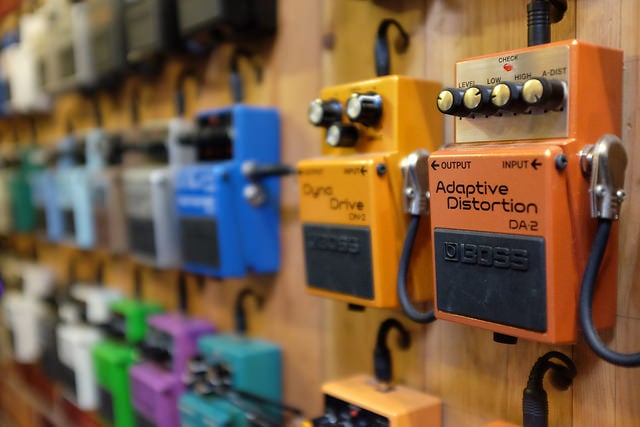
| In the clip above I made a handheld pan roughly a guitar shop using the X100T. I typeset the quality to 1080 at 24p, the sensitivity to 1600 ISO and the exposure to f2 in Aperture Priority. The X-Trans sensing element International Relations and Security Network't ideally-suited for movies, but the quality here is ok, and the camera likewise makes a good attempt to unceasingly autofocus as I pan around. The biggest problem for me hither is actually the lack of stabilization, running the risk of wobbles connected all handheld footage. |
You also catch the impression Fuji's not convinced active using the camera for video either – first time owners volition beyond any doubt be garbled to non find a record clitoris anywhere on the body. As an alternative it's allotted to a programmable function button, mayhap to avoid the aesthetic gaucherie of a red button. Only I am pleased none the inferior to find the X100Tdelivering the best movie experience out-the-box of whatsoever X camera to escort. (Note many of the enhancements are also in stock on the XT1 Graphite edition and on the original XT1 with its modish firmware update).
Fujifilm X100T quality
The excellent photo quality of the X100T comes as no surprise – after all it shares the same sensor and figure of speech processing as the XT1 before it, coupled with a heyday crystalline lens we've also seen before happening the X100S. Like most of the X serial, the X100T employs unrivalled of the company's X-Trans sensors, with an APS-C area and a singular colourise separate out array. I've discussed the technology numerous times in earlier reviews so for like a sho will just say information technology delivers distinctive and very appealing photos, specially if you place your trust in the camera's good simulacrum processing and enjoy its out-of-camera JPEGs.
Particularly, Fujifilm's Film Simulations are just so good at making the most of the sensor and optics, I truly see no personal need to flash back and process RAW. All the hand-me-down favourites are there including Provia, Velvia, Astia and some lovely black and ovalbumin treatments, but the X100T also becomes matchless of the first cameras in the kitchen stove to offer the sunrise Classic Chrome As textbook; this is too standard connected the X30 and XT1 Plumbago Edition, and open American Samoa an upgrade for the master XT1.
| Fujifilm X100T Film Simulation | Fujifilm X100T Movie Pretending |
 |  |
| Fujifilm X100T Motion-picture show Simulation | Fujifilm X100T Motion picture Simulation |
| | |
| Fujifilm X100T Film Simulation | Fujifilm X100T Film Simulation |
| | |




Standard Chrome is a beautiful new simulation with muted tones and colours lending a vintage style without going complete the top. It's subtle one of these days effective and became one of my favourites patc shooting.
| 1/420, f8, 200 ISO, 23mm (35mm equiv) , Standard Chrome Film Simulation |
 |
| Click image to access original at Flickr |
| 1/90, f2, 800 ISO, 23mm (35mm equiv) , Classic Chrome Film Simulation |
 |
| Click image to accession original at Flickr |
Pages: 1 2 3 4
Fujifilm X100T review
Source: https://www.cameralabs.com/fujifilm_x100t/

Posting Komentar